Boston Moving Permits and Tow Zone Signs: How To Reserve Truck Parking
A Boston moving permit reserves a safe, legal and accessible parking space for your moving truck. Although the City of Boston does not legally require a permit for every move, finding an open curb space for a box truck is rarely something you should leave to chance.
Boston has narrow streets, resident-only parking, active parking meters and very limited loading access. Without a reserved space, a moving truck may have to double-park, circle the neighborhood or park far from the correct entrance. That can create tickets, traffic problems, longer carries and substantially more labor time.
Safe Responsible Movers has handled Boston moves since 2008. We have seen parking access determine whether a move stays on schedule or turns into hours of unnecessary carrying and waiting. This guide explains how Boston moving permits work, what they cost, when to apply, how to post the tow-zone signs and what to do when someone parks in your reserved space.
Boston Moving Permit Rules at a Glance
- A standard permit reserves two parking spaces for one day.
- Standard permit hours are 7 a.m. to 5 p.m.
- Two non-metered spaces currently cost $69, including two official signs.
- Two metered spaces currently cost an additional $40, for a typical total of $109.
- You can apply online when the move is at least 15 days and no more than eight weeks away.
- You can apply in person when the move is at least three days and no more than eight weeks away.
- The official signs must be posted at least 48 hours before the permit begins.
- The space must already be a legal parking space.
- Boston permits apply only to streets controlled by the City of Boston.
A moving permit does not override a snow emergency, construction zone, accessible parking space, existing no-stopping zone or permanent tow zone. The permit reserves a legal space. It cannot turn an illegal parking location into a legal one.
Why Boston Moving Permits Matter
Most Boston movers charge by the hour. Parking farther away from the building means the crew must carry every box and piece of furniture over that additional distance.
An extra ten feet may not sound like much. Multiply it by dozens of boxes, mattresses, dressers, couches, tables and other household items, and it becomes a significant amount of additional work. A long carry also increases the amount of time that furniture is exposed to sidewalks, traffic, weather and pedestrians.
The right parking space is particularly important for moves involving:
- Back Bay or Beacon Hill brownstones with long staircases
- South End apartments with narrow streets and limited curb space
- North End buildings where trucks may not fit directly in front
- Charlestown homes with tight streets and resident parking
- Jamaica Plain homes located on or near DCR-controlled roads
- Allston, Brighton and Fenway apartments during the September moving rush
- Buildings with reserved elevators, loading docks or strict moving windows
A permit cannot eliminate every access problem, but it gives your movers a much better chance of parking close to the correct entrance.
How to Get a Boston Moving Permit in Five Steps
Step 1: Determine Who Controls the Street
Before applying, confirm that the parking space is located on a street controlled by the City of Boston. A Boston moving permit is valid only on City-owned streets.
Some Boston roads and parkways are controlled by the Massachusetts Department of Conservation and Recreation, commonly called the DCR. These include various roads around the Emerald Necklace, Fenway, the Riverway and Jamaica Plain.
If the address is on a DCR-controlled road, a City of Boston permit will not reserve the space. You will need to use the Commonwealth’s temporary road-access and moving-permit process instead.
Review the DCR temporary road-access and moving-permit process.
For questions about a DCR street, contact the DCR at 857-393-5412 or [email protected].
Step 2: Apply Online or in Person
There are two ways to obtain a Boston moving permit. Which one you use depends mostly on how far away your moving date is and whether you are reserving space for a truck or moving container.
Applying Online
You can apply online when the moving date is:
- At least 15 days away
- No more than eight weeks away
- For a standard one-day moving-truck permit
After the application is approved, the City mails the permit, official signs and neighborhood notices to the mailing address provided on the application. Physical materials usually arrive within seven to ten business days after approval.
Make sure the mailing address is somewhere you can reliably receive the materials. You will need the physical signs in enough time to post them at least 48 hours before the permit starts.
Apply online for a Boston moving-truck permit.
Applying in Person
You can apply in person when the move is at least three days away but no more than eight weeks away. Applying in person may also be necessary when:
- The moving date is fewer than 15 days away
- You need the permit materials without waiting for mail delivery
- You need a permit for more than one day
- You are placing an eligible moving container in the street
- Your request cannot be processed through the standard online application
Apply in person at:
Office of the Parking Clerk
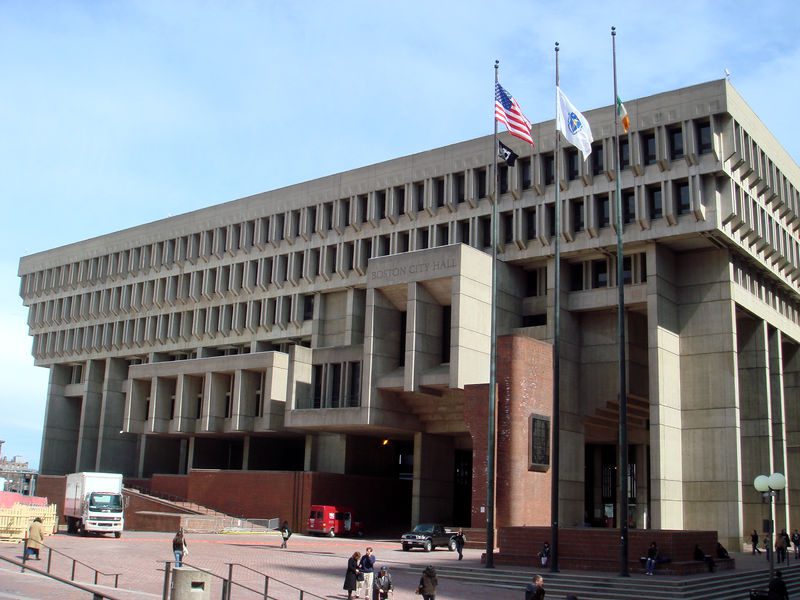
Boston City Hall, Room 224
Windows 4 and 5
1 City Hall Square
Boston, MA 02201
The office is currently open Monday through Friday from 8:30 a.m. to 4:30 p.m.
Be prepared to provide:
- The date of the move
- The address where the moving truck will park
- Whether the requested area contains parking meters
- How many spaces or how much curb space you need
If you are applying for an address on a numbered street in South Boston, the City instructs applicants to spell out the street number. For example, enter “Eighth Street” instead of “8th Street.”
Step 3: Pay for the Permit and Get the Signs
A standard one-day permit for two non-metered parking spaces currently costs $69. That price includes the permit and two official signs.
If the requested area includes two parking meters, the City charges an additional $40. The typical total for two metered spaces is therefore $109.
Online applications can be paid by credit card or debit card. For in-person applications, the City currently accepts:
- Cash
- Visa
- Mastercard
- Discover
- American Express
- Qualifying pinless debit cards
The City no longer accepts personal checks for moving-truck permits. In-person card payments may include a non-refundable processing fee.
The standard permit reserves approximately 40 feet, or two parking spaces, from 7 a.m. until 5 p.m. This is generally enough curb space for one standard moving truck. Larger trucks, multiple trucks or unusual access conditions may require additional space.
Step 4: Post the Tow-Zone Signs and Notify Nearby Drivers
Obtaining the permit does not automatically clear the parking spaces. You or someone acting for you must physically post the official signs.
The signs must be posted at least 48 hours before the permit begins at 7 a.m. The City recommends posting them three days before the move when possible.
Post one sign at each end of the reserved area so drivers can clearly see where the restriction begins and ends. Secure the signs carefully. Rain, wind or loose tape can cause signs to fall, and missing signs can make enforcement more difficult.
The City also provides a flyer or notice for nearby vehicles. Make copies and place them on cars within approximately half a block of the reserved area.
- For non-metered spaces, distribute the flyers every day for at least two days before the move.
- For metered spaces, distribute the flyers at least one day before the move.
Giving drivers plenty of notice is usually better than relying on towing. People on residential streets may leave their vehicles in the same space for several days. A well-posted permit and repeated notices give them a fair opportunity to move before your truck arrives.
Step 5: Check the Space on Moving Day
Check the permitted parking area several hours before your movers are scheduled to arrive. Do not wait until the truck and crew are already outside.
If a vehicle is parked in the properly permitted and posted area, call the Boston Police Department’s non-emergency line at 617-343-4911.
Tell the dispatcher that it is not an emergency. Explain that a vehicle is parked in a properly posted moving-truck space and provide the vehicle’s license plate number.
The police may first attempt to contact the registered owner. If the owner cannot be reached, the police can arrange for the vehicle to be towed.
This process may take a significant amount of time. A permit gives you the legal right to use the space, but it does not guarantee that an illegally parked vehicle will be removed immediately. If your movers are waiting, that waiting time may still be billable.
Remove the Signs and Clean Up After the Move
Once the truck is loaded or unloaded and no longer needs the reserved area, remove:
- The official tow-zone signs
- Copies of the neighborhood flyers
- Tape, string or other sign-posting materials
- Boxes, packing materials and other moving debris
Do not leave signs attached to trees, poles, fences or parking meters after the permit expires. If any City property was moved or disturbed, return it to its original position. Damage to City property should be reported to the appropriate department.
Special Boston Moving-Permit Situations
North End Moves During July and August
North End feasts and related street closures can affect permit availability during July and August. Before applying, contact the Office of the Parking Clerk to confirm whether the requested address is affected by a feast, procession or temporary closure.
This is particularly important for addresses on or near Hanover Street, Battery Street, Fleet Street, Lewis Street, North Street, Endicott Street, Prince Street and other streets used for summer events.
Permit restrictions and feast locations can change each year, so do not rely on a list from a previous summer.
Planning a move in the neighborhood? Learn more about our North End moving services.
August 31 Through September 2
Boston sometimes establishes designated moving-truck drop-off areas during the September 1 moving period. Some of these designated areas may not require individual moving permits.
The locations and rules can change from year to year. Check the City’s current moving guidance before applying. Even when a designated loading area is available, it may not be directly in front of your building, so plan for congestion and possible long carries.
Street Cleaning
A moving permit may be usable during street-cleaning hours, but the City requires someone to remain with the moving vehicle. Confirm the current requirements before relying on a permitted space that overlaps with posted street cleaning.
Snow Emergencies and Existing Tow Zones
A moving permit does not override snow-emergency rules, construction restrictions, accessible parking spaces or an existing no-stopping or tow-zone restriction.
During winter weather, check the City’s current snow-emergency status before the move. A permit does not authorize a truck to park where vehicles are prohibited during a declared emergency.
Rental Trucks
Moving-truck permits can be used for rental box trucks such as U-Haul, Penske and Budget trucks. They cannot be used to reserve street space for a personal car, SUV or minivan.
If you are renting your own truck but need professional help with the furniture, Safe Responsible Movers provides labor-only loading and unloading services.
Moving Containers, Pack Rat, ABF and PODS
Eligible moving containers generally require an in-person application. The City may require a letter of authorization from the company that owns the container, and the container company must meet the City’s bonding requirements.
The City uses a separate process for PODS containers. Boston currently directs PODS customers to Permit Puller at 617-424-7275.
Contact the Office of the Parking Clerk before arranging delivery of any container. Do not assume that a regular online moving-truck permit will cover it.
Common Boston Moving Permit Mistakes
- Applying too early: The City does not accept standard applications more than eight weeks before the move.
- Applying too late: Online applications require at least 15 days. In-person applications require at least three days.
- Requesting an illegal space: A permit cannot reserve a bus stop, accessible space, fire lane or existing no-stopping zone.
- Applying to the wrong agency: DCR-controlled roads require a state permit rather than a City of Boston permit.
- Posting the signs too late: Official signs need to be posted at least 48 hours before the permit begins.
- Failing to distribute flyers: The notices give nearby drivers time to remove their vehicles.
- Checking the space too late: Police and towing response may take time.
- Assuming a permit guarantees immediate access: Construction, weather, building restrictions and illegally parked vehicles can still cause delays.
- Leaving signs behind: The permit holder is responsible for removing signs, flyers and debris.
Safe Responsible Movers Can Handle Your Boston Moving Permits
Obtaining the permit is only one part of the process. Someone still has to receive or pick up the materials, post the official signs, return to distribute notices, check the space and remove the signs after the move.
When scheduling and address conditions allow, Safe Responsible Movers can handle the permit acquisition, official sign posting and sign removal for your Boston move.
Our current permit-service fees are:
- One permit: $99
- Two permits: $150
- Three or more permits: $199
These service fees are charged in addition to the permit fees paid to the City of Boston or the Commonwealth of Massachusetts.
Our standard permit service includes:
- Obtaining the permit when the application qualifies
- Posting the official permit signs
- Removing the signs after the move
Unless specifically included in your written estimate, the service does not include:
- Daily distribution of flyers throughout the neighborhood
- Monitoring the parking space before the crew arrives
- Calling the police about an illegally parked vehicle
- Waiting for or coordinating with a towing company
- Additional City, DCR, meter or third-party permit charges
We generally require at least one week of advance notice to provide permit service, and more notice is strongly recommended. The City’s application deadlines still apply. If the moving date is fewer than three days away, it may be too late to obtain a City permit.
Permit-service availability depends on the moving date, street jurisdiction, requested parking location and our ability to post and remove the signs.
Boston Moving Permit FAQs
Are moving permits legally required in Boston?
No. The City does not legally require a moving permit for every move. A permit is still strongly recommended when the truck will need to park on a busy, narrow, metered or resident-only street. It reserves a legal parking area and can help prevent tickets, double-parking and long carries.
How much does a Boston moving permit cost?
A standard one-day permit for two non-metered spaces currently costs $69, including two official signs. Two metered spaces add $40, bringing the typical total to $109.
How far in advance should I apply?
Apply online when the move is between 15 days and eight weeks away. Apply in person when it is between three days and eight weeks away.
When do I need to post the signs?
The official signs must be posted at least 48 hours before the permit starts at 7 a.m. Posting them three days in advance gives nearby drivers more notice.
What happens if someone parks in my reserved space?
Call the Boston Police non-emergency line at 617-343-4911. Explain that a vehicle is parked in a properly permitted and posted moving space and provide the license plate number.
Can I reserve a space for my personal car?
No. The permit is intended for moving trucks and eligible moving containers, not personal cars, SUVs or minivans.
Can I use a Boston permit on Jamaicaway or another DCR road?
No. City permits apply only to City-owned streets. A DCR-controlled roadway requires a temporary road-access or moving permit from the Commonwealth.
Can Safe Responsible Movers obtain and post the permits?
Yes, when the address, timing and scheduling allow. Our permit service can include obtaining the permit, posting the official signs and removing them after the move. City and state charges are additional.
Who should I contact with permit questions?
Contact the Boston Office of the Parking Clerk at 617-635-2560 or [email protected].
You can also review the City’s official Boston moving-truck permit instructions.
Need Movers Who Understand Boston Parking and Access?
A parking permit is important, but it is not the entire access plan. Truck size, staircase length, elevators, loading docks, building requirements and the distance from the curb to the apartment can all affect the crew size and total moving time.
Safe Responsible Movers has handled Boston apartment, condominium and residential moves since 2008. We plan around real parking and access conditions rather than assuming the truck will be able to pull directly in front of the building.
A Boston moving permit reserves a safe, legal and accessible parking space for your moving truck. Although the City of Boston does not legally require a permit for every move, finding an open curb space for a box truck is rarely something you should leave to chance.
Boston has narrow streets, resident-only parking, active parking meters and very limited loading access. Without a reserved space, a moving truck may have to double-park, circle the neighborhood or park far from the correct entrance. That can create tickets, traffic problems, longer carries and substantially more labor time.
Safe Responsible Movers has handled Boston moves since 2008. We have seen parking access determine whether a move stays on schedule or turns into hours of unnecessary carrying and waiting. This guide explains how Boston moving permits work, what they cost, when to apply, how to post the tow-zone signs and what to do when someone parks in your reserved space.
Boston Moving Permit Rules at a Glance
- A standard permit reserves two parking spaces for one day.
- Standard permit hours are 7 a.m. to 5 p.m.
- Two non-metered spaces currently cost $69, including two official signs.
- Two metered spaces currently cost an additional $40, for a typical total of $109.
- You can apply online when the move is at least 15 days and no more than eight weeks away.
- You can apply in person when the move is at least three days and no more than eight weeks away.
- The official signs must be posted at least 48 hours before the permit begins.
- The space must already be a legal parking space.
- Boston permits apply only to streets controlled by the City of Boston.
A moving permit does not override a snow emergency, construction zone, accessible parking space, existing no-stopping zone or permanent tow zone. The permit reserves a legal space. It cannot turn an illegal parking location into a legal one.
Why Boston Moving Permits Matter
Most Boston movers charge by the hour. Parking farther away from the building means the crew must carry every box and piece of furniture over that additional distance.
An extra ten feet may not sound like much. Multiply it by dozens of boxes, mattresses, dressers, couches, tables and other household items, and it becomes a significant amount of additional work. A long carry also increases the amount of time that furniture is exposed to sidewalks, traffic, weather and pedestrians.
The right parking space is particularly important for moves involving:
- Back Bay or Beacon Hill brownstones with long staircases
- South End apartments with narrow streets and limited curb space
- North End buildings where trucks may not fit directly in front
- Charlestown homes with tight streets and resident parking
- Jamaica Plain homes located on or near DCR-controlled roads
- Allston, Brighton and Fenway apartments during the September moving rush
- Buildings with reserved elevators, loading docks or strict moving windows
A permit cannot eliminate every access problem, but it gives your movers a much better chance of parking close to the correct entrance.
How to Get a Boston Moving Permit in Five Steps
Step 1: Determine Who Controls the Street
Before applying, confirm that the parking space is located on a street controlled by the City of Boston. A Boston moving permit is valid only on City-owned streets.
Some Boston roads and parkways are controlled by the Massachusetts Department of Conservation and Recreation, commonly called the DCR. These include various roads around the Emerald Necklace, Fenway, the Riverway and Jamaica Plain.
If the address is on a DCR-controlled road, a City of Boston permit will not reserve the space. You will need to use the Commonwealth’s temporary road-access and moving-permit process instead.
Review the DCR temporary road-access and moving-permit process.
For questions about a DCR street, contact the DCR at 857-393-5412 or [email protected].
Step 2: Apply Online or in Person
There are two ways to obtain a Boston moving permit. Which one you use depends mostly on how far away your moving date is and whether you are reserving space for a truck or moving container.
Applying Online
You can apply online when the moving date is:
- At least 15 days away
- No more than eight weeks away
- For a standard one-day moving-truck permit
After the application is approved, the City mails the permit, official signs and neighborhood notices to the mailing address provided on the application. Physical materials usually arrive within seven to ten business days after approval.
Make sure the mailing address is somewhere you can reliably receive the materials. You will need the physical signs in enough time to post them at least 48 hours before the permit starts.
Apply online for a Boston moving-truck permit.
Applying in Person
You can apply in person when the move is at least three days away but no more than eight weeks away. Applying in person may also be necessary when:
- The moving date is fewer than 15 days away
- You need the permit materials without waiting for mail delivery
- You need a permit for more than one day
- You are placing an eligible moving container in the street
- Your request cannot be processed through the standard online application
Apply in person at:
Office of the Parking Clerk
Boston City Hall, Room 224
Windows 4 and 5
1 City Hall Square
Boston, MA 02201
The office is currently open Monday through Friday from 8:30 a.m. to 4:30 p.m.
Be prepared to provide:
- The date of the move
- The address where the moving truck will park
- Whether the requested area contains parking meters
- How many spaces or how much curb space you need
If you are applying for an address on a numbered street in South Boston, the City instructs applicants to spell out the street number. For example, enter “Eighth Street” instead of “8th Street.”
Step 3: Pay for the Permit and Get the Signs
A standard one-day permit for two non-metered parking spaces currently costs $69. That price includes the permit and two official signs.
If the requested area includes two parking meters, the City charges an additional $40. The typical total for two metered spaces is therefore $109.
Online applications can be paid by credit card or debit card. For in-person applications, the City currently accepts:
- Cash
- Visa
- Mastercard
- Discover
- American Express
- Qualifying pinless debit cards
The City no longer accepts personal checks for moving-truck permits. In-person card payments may include a non-refundable processing fee.
The standard permit reserves approximately 40 feet, or two parking spaces, from 7 a.m. until 5 p.m. This is generally enough curb space for one standard moving truck. Larger trucks, multiple trucks or unusual access conditions may require additional space.
Step 4: Post the Tow-Zone Signs and Notify Nearby Drivers
Obtaining the permit does not automatically clear the parking spaces. You or someone acting for you must physically post the official signs.
The signs must be posted at least 48 hours before the permit begins at 7 a.m. The City recommends posting them three days before the move when possible.
Post one sign at each end of the reserved area so drivers can clearly see where the restriction begins and ends. Secure the signs carefully. Rain, wind or loose tape can cause signs to fall, and missing signs can make enforcement more difficult.
The City also provides a flyer or notice for nearby vehicles. Make copies and place them on cars within approximately half a block of the reserved area.
- For non-metered spaces, distribute the flyers every day for at least two days before the move.
- For metered spaces, distribute the flyers at least one day before the move.
Giving drivers plenty of notice is usually better than relying on towing. People on residential streets may leave their vehicles in the same space for several days. A well-posted permit and repeated notices give them a fair opportunity to move before your truck arrives.
Step 5: Check the Space on Moving Day
Check the permitted parking area several hours before your movers are scheduled to arrive. Do not wait until the truck and crew are already outside.
If a vehicle is parked in the properly permitted and posted area, call the Boston Police Department’s non-emergency line at 617-343-4911.
Tell the dispatcher that it is not an emergency. Explain that a vehicle is parked in a properly posted moving-truck space and provide the vehicle’s license plate number.
The police may first attempt to contact the registered owner. If the owner cannot be reached, the police can arrange for the vehicle to be towed.
This process may take a significant amount of time. A permit gives you the legal right to use the space, but it does not guarantee that an illegally parked vehicle will be removed immediately. If your movers are waiting, that waiting time may still be billable.
Remove the Signs and Clean Up After the Move
Once the truck is loaded or unloaded and no longer needs the reserved area, remove:
- The official tow-zone signs
- Copies of the neighborhood flyers
- Tape, string or other sign-posting materials
- Boxes, packing materials and other moving debris
Do not leave signs attached to trees, poles, fences or parking meters after the permit expires. If any City property was moved or disturbed, return it to its original position. Damage to City property should be reported to the appropriate department.
Special Boston Moving-Permit Situations
North End Moves During July and August
North End feasts and related street closures can affect permit availability during July and August. Before applying, contact the Office of the Parking Clerk to confirm whether the requested address is affected by a feast, procession or temporary closure.
This is particularly important for addresses on or near Hanover Street, Battery Street, Fleet Street, Lewis Street, North Street, Endicott Street, Prince Street and other streets used for summer events.
Permit restrictions and feast locations can change each year, so do not rely on a list from a previous summer.
Planning a move in the neighborhood? Learn more about our North End moving services.
August 31 Through September 2
Boston sometimes establishes designated moving-truck drop-off areas during the September 1 moving period. Some of these designated areas may not require individual moving permits.
The locations and rules can change from year to year. Check the City’s current moving guidance before applying. Even when a designated loading area is available, it may not be directly in front of your building, so plan for congestion and possible long carries.
Street Cleaning
A moving permit may be usable during street-cleaning hours, but the City requires someone to remain with the moving vehicle. Confirm the current requirements before relying on a permitted space that overlaps with posted street cleaning.
Snow Emergencies and Existing Tow Zones
A moving permit does not override snow-emergency rules, construction restrictions, accessible parking spaces or an existing no-stopping or tow-zone restriction.
During winter weather, check the City’s current snow-emergency status before the move. A permit does not authorize a truck to park where vehicles are prohibited during a declared emergency.
Rental Trucks
Moving-truck permits can be used for rental box trucks such as U-Haul, Penske and Budget trucks. They cannot be used to reserve street space for a personal car, SUV or minivan.
If you are renting your own truck but need professional help with the furniture, Safe Responsible Movers provides labor-only loading and unloading services.
Moving Containers, Pack Rat, ABF and PODS
Eligible moving containers generally require an in-person application. The City may require a letter of authorization from the company that owns the container, and the container company must meet the City’s bonding requirements.
The City uses a separate process for PODS containers. Boston currently directs PODS customers to Permit Puller at 617-424-7275.
Contact the Office of the Parking Clerk before arranging delivery of any container. Do not assume that a regular online moving-truck permit will cover it.
Common Boston Moving Permit Mistakes
- Applying too early: The City does not accept standard applications more than eight weeks before the move.
- Applying too late: Online applications require at least 15 days. In-person applications require at least three days.
- Requesting an illegal space: A permit cannot reserve a bus stop, accessible space, fire lane or existing no-stopping zone.
- Applying to the wrong agency: DCR-controlled roads require a state permit rather than a City of Boston permit.
- Posting the signs too late: Official signs need to be posted at least 48 hours before the permit begins.
- Failing to distribute flyers: The notices give nearby drivers time to remove their vehicles.
- Checking the space too late: Police and towing response may take time.
- Assuming a permit guarantees immediate access: Construction, weather, building restrictions and illegally parked vehicles can still cause delays.
- Leaving signs behind: The permit holder is responsible for removing signs, flyers and debris.
Safe Responsible Movers Can Handle Your Boston Moving Permits
Obtaining the permit is only one part of the process. Someone still has to receive or pick up the materials, post the official signs, return to distribute notices, check the space and remove the signs after the move.
When scheduling and address conditions allow, Safe Responsible Movers can handle the permit acquisition, official sign posting and sign removal for your Boston move.
Our current permit-service fees are:
- One permit: $99
- Two permits: $150
- Three or more permits: $199
These service fees are charged in addition to the permit fees paid to the City of Boston or the Commonwealth of Massachusetts.
Our standard permit service includes:
- Obtaining the permit when the application qualifies
- Posting the official permit signs
- Removing the signs after the move
Unless specifically included in your written estimate, the service does not include:
- Daily distribution of flyers throughout the neighborhood
- Monitoring the parking space before the crew arrives
- Calling the police about an illegally parked vehicle
- Waiting for or coordinating with a towing company
- Additional City, DCR, meter or third-party permit charges
We generally require at least one week of advance notice to provide permit service, and more notice is strongly recommended. The City’s application deadlines still apply. If the moving date is fewer than three days away, it may be too late to obtain a City permit.
Permit-service availability depends on the moving date, street jurisdiction, requested parking location and our ability to post and remove the signs.
Boston Moving Permit FAQs
Are moving permits legally required in Boston?
No. The City does not legally require a moving permit for every move. A permit is still strongly recommended when the truck will need to park on a busy, narrow, metered or resident-only street. It reserves a legal parking area and can help prevent tickets, double-parking and long carries.
How much does a Boston moving permit cost?
A standard one-day permit for two non-metered spaces currently costs $69, including two official signs. Two metered spaces add $40, bringing the typical total to $109.
How far in advance should I apply?
Apply online when the move is between 15 days and eight weeks away. Apply in person when it is between three days and eight weeks away.
When do I need to post the signs?
The official signs must be posted at least 48 hours before the permit starts at 7 a.m. Posting them three days in advance gives nearby drivers more notice.
What happens if someone parks in my reserved space?
Call the Boston Police non-emergency line at 617-343-4911. Explain that a vehicle is parked in a properly permitted and posted moving space and provide the license plate number.
Can I reserve a space for my personal car?
No. The permit is intended for moving trucks and eligible moving containers, not personal cars, SUVs or minivans.
Can I use a Boston permit on Jamaicaway or another DCR road?
No. City permits apply only to City-owned streets. A DCR-controlled roadway requires a temporary road-access or moving permit from the Commonwealth.
Can Safe Responsible Movers obtain and post the permits?
Yes, when the address, timing and scheduling allow. Our permit service can include obtaining the permit, posting the official signs and removing them after the move. City and state charges are additional.
Who should I contact with permit questions?
Contact the Boston Office of the Parking Clerk at 617-635-2560 or [email protected].
You can also review the City’s official Boston moving-truck permit instructions.
Need Movers Who Understand Boston Parking and Access?
A parking permit is important, but it is not the entire access plan. Truck size, staircase length, elevators, loading docks, building requirements and the distance from the curb to the apartment can all affect the crew size and total moving time.
Safe Responsible Movers has handled Boston apartment, condominium and residential moves since 2008. We plan around real parking and access conditions rather than assuming the truck will be able to pull directly in front of the building.
Moving Permits
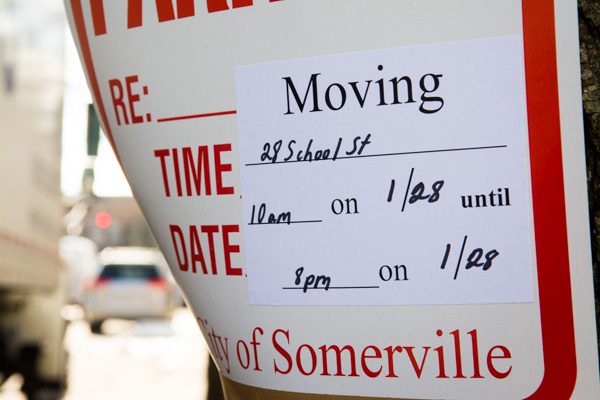
We help secure and post moving permits and temporary No Parking signs in Boston, Brookline, and Somerville so your moving truck has a safe, legal, and accessible place to park on moving day.
Commercial Moves
Our teams of commercial movers in Boston has the experience needed to make your Massachusetts office move run smoothly.

Areas of Service
We handle moves throughout Massachusetts, including Boston, Metro West, the South Shore, North Shore, Worcester, South Coast, and Cape Cod.

Have Moving Questions?
We have answers! Visit our FAQs page for answers to some of our most commonly asked questions.

Moving Resources
Some of our favorite places to get packing supplies, donation centers, and more. Tips from the best movers in Boston!